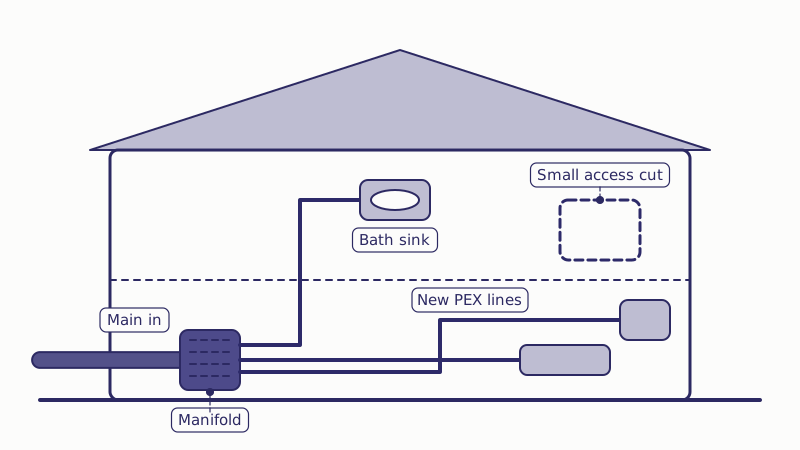
A repipe means pulling out the pipes that bring water to your faucets, showers and appliances, and running new ones. You do it when the old lines are leaking, rusting from the inside or made from a material that has a track record of failing. We'll arrange for a local plumber to come to you, look at the house and write up a fixed quote before any work starts. Back on the Los Angeles plumbing home page you can see everything else we cover, and below is the full picture on repiping: access, permits, timing, cost, materials and what you can and cannot do yourself.
Can you replumb a house without removing walls?
Mostly yes, but not with zero cuts. A repipe nearly always needs some drywall openings, typically small access holes where a line drops to a fixture or a shutoff valve. Plumbers route most of the new pipe through the attic, crawl space or ceiling, so whole walls rarely come out. The old pipes are usually capped and left in place.
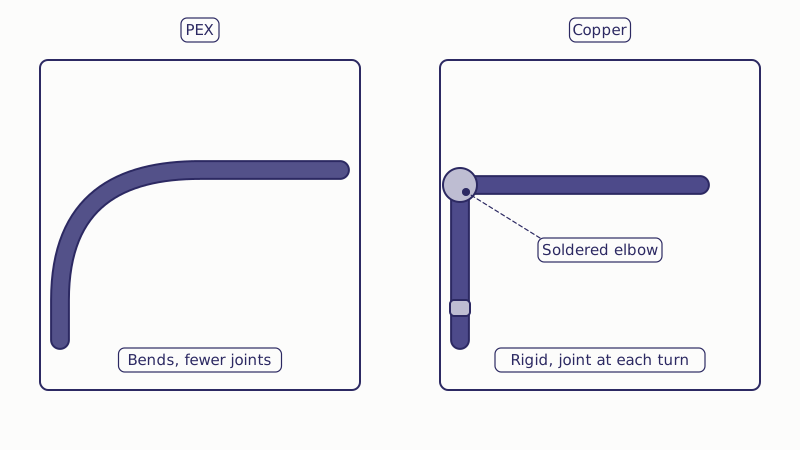
PEX needs fewer openings than copper because it bends around corners and can be pulled through the wall in one piece. Copper needs a joint at every turn, which means more access. Homes with a raised foundation or a usable attic are the easiest. A house on a concrete slab with lines in the slab is a different job: those are often abandoned and rerouted overhead, which is what we describe on the page about slab leak repair or repipe.
Ask who patches the drywall and who paints. Many plumbers rough in the pipe and leave finish work to a separate drywall crew, so the patching may be a second line on your quote or a separate contractor.
Do you have to pull a permit to repipe a house?
Yes. Replacing the water supply lines in a Los Angeles home takes a plumbing permit from the Los Angeles Department of Building and Safety (LADBS), and the work is inspected before walls are closed. The plumber who does the job normally applies for the permit and books the inspections. If a quote does not mention a permit, ask why.
In practice, a full repipe has a rough inspection while the pipes are exposed and pressure-tested, and a final inspection when everything is connected. Published contractor guides put permit approval at a few business days for a standard house, but we could not confirm that figure on LADBS's own pages, so ask the plumber for the current timing.
Skipping the permit can cost you later. An unpermitted repipe can come up in a home sale or an insurance claim. A pressure regulator and thermal expansion tank are often part of the same permit when the water pressure or the heater setup calls for them, which links to the explanation on water pressure regulators.
How long does it take to replumb a whole house?
For most houses, the plumbing itself takes one to three days with PEX and three to seven days with copper, based on timelines that repipe companies publish. Add the inspection wait and the wall patching, and the whole project from first day to final sign-off often runs a week or two.
The size of the house matters, along with the number of bathrooms and how easy the attic or crawl space is to reach. A two-story house with tight access takes longer than a single-story ranch with a crawl space.
Expect the water to be off for part of each working day. Plumbers usually restore water at night, but not always, so ask. Plan for showers somewhere else on the first day. Anyone promising a one-day repipe with walls closed, patched and painted is skipping a step, and the usual one is the inspection.
How expensive is it to repipe a house?
A typical single-family repipe runs about $4,000 to $15,000 nationally, and for a 2,000 square foot, two-bath home published guides put PEX at roughly $4,000 to $10,000 and copper at $8,000 to $18,000. These are a guide, not a quote. Labor is most of the bill, and your quote will depend on access, bathroom count and patching.
Several things move the number in Los Angeles. Houses with a concrete slab, hillside houses with long runs or steep crawl spaces, and two-story houses with plumbing on both floors all take more labor. Copper costs more than PEX in both material and hours. The finish work is the line people forget: drywall, texture, paint and any tile that has to be opened.
For a deeper look at line items and per-square-foot figures, see the full repipe house cost breakdown and the page on PEX repipe cost. You can also compare several written quotes. The line that varies most is what is included for wall repair.
How do you know if you need to repipe?
You likely need a repipe if you have repeated leaks in different spots, rusty or brown water that does not clear, low pressure in several fixtures, or pipes made of galvanized steel, polybutylene or early copper. One leak in an otherwise sound system is a repair, not a repipe.
Age matters in Los Angeles because of when houses were built. Homes from the 1920s through the 1950s were commonly plumbed with galvanized steel for water and cast iron for drains, and copper took over from the late 1950s into the 1970s. Houses built between roughly 1978 and 1995 can have polybutylene, a gray or blue plastic that was withdrawn after widespread failures.
A repipe replaces the supply side only. Cast iron drains are a separate system and are often inspected by camera. If both are failing, ask for a quote on each, so you can decide on order and timing. The reasons people repipe are laid out on the page about why repipe a house, and if you have an older house you can see the typical problems in replacing plumbing in an old house.
Is it worth it to repipe a house?
It is worth it when the pipes are failing or the material is known to fail, because each leak costs more than the one before it: water damage, drywall, flooring and a mold risk. It is less clear-cut for a sound system with one repairable leak, where a spot repair buys years.
Weigh it against what a leak costs you. A pinhole in a wall can run for weeks before a stain shows. Insurers can also be strict about certain materials. Polybutylene in particular can lead to a declined policy or a requirement to replace it before renewal, according to inspector and repipe-company sources, so check with your own insurer.
A repipe also fixes things a repair cannot: pressure drop from corroded galvanized pipe, rusty water at the tap, and pipes that need fresh connections to new fixtures. If you plan a remodel, doing the repipe first while walls are open saves money on patching.
What is the cheapest way to repipe a house?
The cheapest sound option is PEX with a manifold or home-run layout, a reasonable number of access cuts and a plumber who has an open attic or crawl space to work through. Copper is the premium route, mostly because it takes more labor.
Do not chase the lowest bid with no permit line. An unpermitted job that gets flagged later will cost far more than the savings. Check the contractor at the California Contractors State License Board (cslb.ca.gov) using the license check tool. Repiping is C-36 plumbing work, and the state asks you to verify the license before you hire.
Smaller savings that are real: choose when to do the drywall patching yourself if the plumber will separate it, group the repipe with a remodel, and ask for the pipe material, fittings brand and warranty in writing. For the comparison between materials, see PEX versus copper and the explanation of PEX type A and B.
Which is better for a Los Angeles house, PEX or copper?
Both work. PEX is cheaper and faster to install, resists corrosion and handles our chloramine-treated water, and copper lasts longer in the right conditions and handles heat and sunlight better. Most LA repipes today use PEX. Copper is chosen for exposed runs, for some buyers and in some older homes where it matches existing pipe.
LADWP says it is expanding chloramine across its whole system. Hardness varies a lot by area, from roughly 9 grains per gallon in the Valley and Western LA to about 16 in Eastern LA and the Harbor, according to LADWP's 2022 figures. Hard water speeds up scale in galvanized pipe and water heaters, while PEX does not corrode. Copper can develop pinholes in some water chemistries, which you will see covered in the guide to pinhole leaks in copper pipe.
Common questions
What is a whole home repipe?
A whole home repipe replaces all the water supply piping in a house, from where the line enters at the meter or main shutoff to every faucet, toilet, shower and appliance. The new pipes are PEX or copper. Drain and vent pipes, usually cast iron or ABS in Los Angeles homes, are a separate system and are not part of a standard repipe.
Can I repipe my own house with PEX?
In California a homeowner can sometimes act as an owner-builder on their own home, but it still needs a plumbing permit and inspections from LADBS, and the work must pass. Gas piping and the main service line are higher-risk and the work rules are stricter. Ask LADBS what an owner-builder is allowed to do, and read the walk-through in how to repipe a house with PEX first.
How often does a house need to be replumbed?
It depends on the pipe. Galvanized steel is commonly cited at 40 to 60 years, copper at 50 to 70 years and PEX at 40 to 50 years or more, with water chemistry and installation quality moving all of those. A house is not on a fixed schedule: leaks, rust, and pressure loss tell you when. Polybutylene is a replace-it-now case.
What is the 135 rule in plumbing?
It is a drain rule, not a water supply rule. Plumbing codes limit how much a horizontal drain line can change direction before a cleanout is needed, and 135 degrees is the figure often quoted. It is unrelated to repiping, which deals with pressurized supply lines. If a plumber mentions it, they are talking about drains.
Can I replace pipes myself?
You can replace a short section of exposed supply line, a fixture shutoff or a faucet connector yourself in many cases, and permits are usually not needed for like-for-like fixture swaps. Anything that replaces or changes piping inside walls, or touches gas, needs a permit and often a contractor with a California license. For a leak, copper pipe leak repair covers what is safe to do.
Ready for a written quote? Use the quote page and a local plumber will come to you.