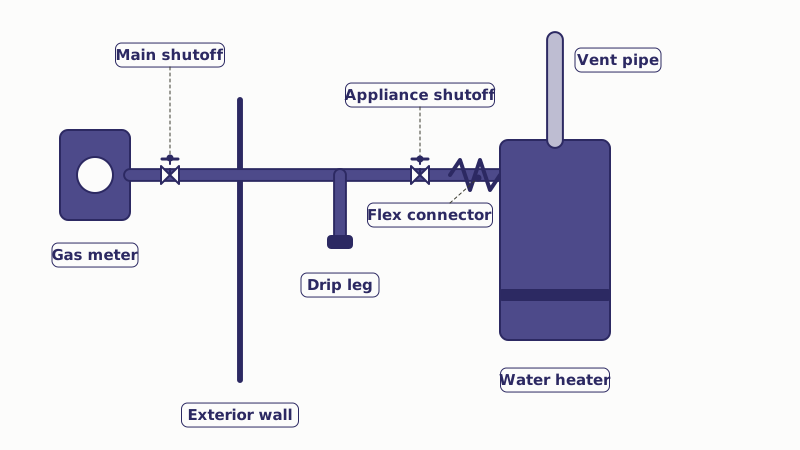
In California, plumbing contractors work under the C-36 classification, and gas piping in the City of Los Angeles generally needs an LADBS plumbing permit and an inspection. If you want a gas line run, moved or repaired, we arrange a local plumber who comes to you, confirms the permit path and gives a written quote before work starts. If you smell gas right now, leave and call SoCalGas, not us. The plumber home page shows the rest of what we arrange.
What does a gas plumber with a state license do?
A gas plumber runs, extends, repairs and tests the piping that carries natural gas to appliances such as a range, dryer, water heater, furnace, fireplace, barbecue or pool heater, and connects the appliance with approved fittings. The work ends with a pressure test and, where required, a city inspection.
In California a contractor must hold a state license for jobs of $over $1,000 once labor and materials are added, or for work that needs a permit. The C-36 plumbing classification covers plumbing work including gas piping and water heaters, and you can look up any license number on the CSLB website.
Typical gas jobs:
- Adding a gas line for a range, dryer or outdoor grill.
- Replacing a corroded or leaking pipe section.
- Connecting a new water heater or tankless unit.
- Installing an earthquake shutoff valve. Our page on earthquake gas shutoff valves covers that decision.
- Pressure testing a line after changes.
Our pages on gas line plumbers and gas line costs cover the job and the price in more depth, and flexible gas line sizing covers that material.
What should I do if I smell gas?
Leave the building at once, and do not use switches, lighters, phones or anything that could spark inside. From a safe distance, call SoCalGas on 1-800-427-2200, and call 911 if there is immediate danger. Do not call a plumber first, and do not go back in until SoCalGas says it is safe.
SoCalGas says its emergency line is staffed around the clock. Natural gas has an added odor, but it can fade, so do not rely on smell alone. If you hear a hiss near a gas line or an appliance, treat it the same way.
After SoCalGas makes the area safe, a plumber can find the failed fitting or pipe, repair it and test. Gas repairs are not a do-it-yourself job, and nothing on this page is a substitute for the utility's instructions.
Does gas piping need a permit in Los Angeles?
Yes, in most cases. LADBS says a plumbing permit is required for installing any gas piping, with a narrow exception for very short connections between an existing outlet and an appliance in the same room. Larger systems go through plan check first, and new or changed piping is pressure tested at inspection.
LADBS lists fuel gas piping among the work requiring a permit, and says systems with more than 10 outlets, and medium-pressure, high-pressure or methane systems, need plans approved before a permit issues. Smaller home jobs generally go through a simpler route, and the plumber we arrange tells you which one applies.
Inspections happen in stages. LADBS says you must pass the inspection for each phase before moving on, and that regular inspections are requested a day ahead. The utility normally turns gas on only after the work is approved, so schedule the inspection before you plan to cook on the new line.
If you are asking about residential gas piping codes, the City of Los Angeles applies the California Plumbing Code, with local amendments, and the rules cover pipe material, sizing, connectors, supports, shutoffs and pressure testing. A plumber builds to that code, and the city inspector verifies it. Ask LADBS for the current edition.
When does water and drain work need a permit?
LADBS requires a plumbing permit for any installation or modification of drainage systems and potable water piping, not just gas. Like-for-like repairs are treated differently, so ask before you start. Water heater replacement, repipes and new fixtures commonly fall under permit rules.
LADBS lists potable water piping and drainage in the same permit group as gas. Plans must be approved first for larger systems, for example those with a 2-inch or larger water supply. It exempts plan check for existing systems that are added to or altered under certain fixture-unit limits.
Our page on plumber inspection cost covers what a permit inspection, a plumber's inspection and a sewer camera inspection cost, and who may pull a permit. LADBS says owners can apply for plumbing permits with an Owner-Builder Declaration, but gas work carries risk, so many owners hire it out.
What is backflow testing, and who does it?
Backflow testing checks that the valve assembly protecting the public water supply still seals. In Los Angeles, LADWP Rule 16-D requires approved assemblies to be tested at least annually by a tester holding a Los Angeles County credential. A test often costs about $75 to $150 per assembly.
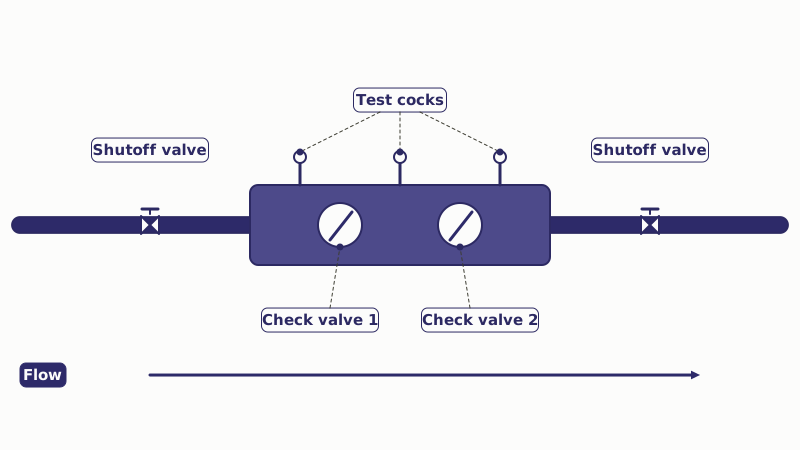
The assembly sits on a service line, commonly an irrigation or fire line, and stops water from flowing backward into the drinking supply. LADWP's rule lists the conditions that require one. Many ordinary single-family domestic lines are not among them, but ask if you are unsure.
Search terms like backflow testing, device testing, gauge testing and assembly testing all describe this one annual test. Our page on backflow testing services covers who may test, what a failed test means and how to book. A plumbing license alone is not the same as the county tester credential.
How do I know I am hiring the right kind of plumber?
Check the license on the CSLB website, make sure the classification fits the work, and ask who pulls the permit. A gas job should come with a written quote, a named permit path and an inspection. Be cautious of anyone who says a permit is not needed for new gas piping.
Ask these questions:
- Is the license active, and does the classification cover plumbing?
- Will you pull the permit, and is the fee in the quote?
- Who calls for the inspection, and when?
- What does the pressure test cover?
- What is the payment schedule?
California limits a down payment on a home improvement contract to the lesser of $1,000 or 10 percent, with a few exceptions, and the CSLB publishes a guide to the contract rules. Get quotes from more than one business on the same scope before you decide.
Common questions
How long does a gas plumber visit take?
A simple appliance connection can be done in a few hours. A new gas run, with a pressure test, takes longer, and the permit inspection adds scheduling time on top. Ask for a timeline in the written quote. Gas is not turned on until the work is approved, so plan around that.
What should I ask before I hire someone for gas plumbing?
Ask for their California contractor license number and check it with the CSLB, ask whether they pull the permit, whether the quote includes inspection, and what pipe and fittings they will use. Ask how the line will be tested. Get everything in writing, including the payment schedule.
Does someone need to be at the property?
Yes, at least when the work begins, to show the work area, and for the walk-through and testing. Gas will be shut off to the line during work, and an adult should be present when it is turned back on. For a permit inspection, someone must give the inspector access.
Can a handyman run a gas line?
Not legally, if the work needs a license or a permit. California requires a contractor license for work of $1,000 or more or work requiring a permit, and gas piping in Los Angeles needs a plumbing permit. A handyman who offers gas work without a license or a permit puts you at risk, so check the CSLB first.
Who tests a backflow device in Los Angeles?
A tester credentialed by the Los Angeles County Department of Public Health, per LADWP Rule 16-D. A plumbing license alone is not the same credential. The tester files the report, and if the device fails, repairs are made and the tester approves it again. Ask any business for their county credential before booking.