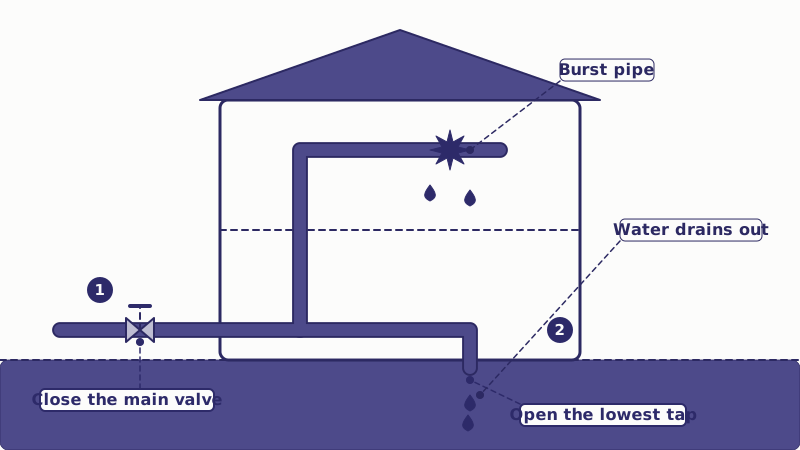
Close the main water shutoff, open a low faucet to drain the line, keep clear of wet electrical equipment, and call a plumber. We arrange a local plumber who comes to your home, stops the leak, and gives you a written quote before repair work goes ahead. If you cannot shut the water off, LADWP takes water emergency calls on 1-800-342-5397. The bigger picture of leak work is on our page for a plumber for leaks. Send your details through the quote page and we start from there.
What do you do when your pipes burst?
Shut off the water at the main, then open a faucet at the lowest point of the house to drain the line. If water is near outlets, appliances or the panel, switch off power only if you can reach the switch dry and safely. Move valuables, photograph the damage and call a plumber.
Where is the main? In many Los Angeles homes it sits near the front of the house, on the garage wall or at the meter box. Apartment and condo tenants may find a shutoff under the unit sink or in a utility closet, and should call the building manager at once, in writing too, so there is a record.
Do not walk through standing water near live electrical equipment. Do not use a wet vacuum on a flooded area that includes outlets. Open windows and doors only if it helps move water outside. If the ceiling bulges with water, a small hole at the lowest point can relieve it, but only if power is off in that area, and you stand out of the way of falling plaster.
What happens when your pipes burst?
Water escapes at full line pressure, so a small split can release many gallons in minutes. It soaks insulation, drywall and flooring, runs to the lowest point, and can drip into rooms below. Within a day or two, wet materials start to swell, stain and grow mold, which is why drying matters as much as the repair.
The pipe repair is only the start. A burst pipe can leave the following:
- Soaked drywall that must be cut out and replaced.
- Wet insulation, which holds moisture against framing.
- Warped flooring and swollen cabinets.
- A spike in your water bill from the gallons that ran.
Water that came from a clean supply line is different from sewage or storm water. A burst supply pipe is generally treated as clean at first, though standing water becomes a problem as materials stay wet. If sewage is involved, that is a health matter, and a plumber and a cleanup company should decide the next steps.
How long does it take a plumber to fix a burst pipe?
A burst pipe in an accessible spot is often fixed in a few hours. One inside a wall adds time to open and close the wall, and one under a slab can take a day or more. Arrival time depends on the plumber and the day, so ask for the window when you book, not a promise.
On arrival the plumber confirms the shutoff, finds the split, and decides between a section repair and a longer replacement. If the pipe is old or fails in several places, they may recommend a larger job, and that is a conversation to have with a written quote in hand, not under pressure.
Drying and drywall repair follow the plumber and are often handled by other trades. Ask what the quote includes, and what it leaves for someone else.
Are burst pipes expensive to fix?
The pipe repair is often a few hundred dollars, while the water damage is where costs grow. Published Los Angeles prices run about $150 to $400 to locate a hidden leak and about $2,000 to $6,000 for a typical slab leak repair, and after-hours calls often carry a higher rate. A written quote shows the true figure.
Cost depends on where the pipe is. An exposed copper or PEX line in a garage is quick. A line behind a finished wall adds opening, patching and paint. A line under a concrete slab is the costliest, and our slab leak repair cost guide shows the ranges by method.
Insurance may pay for the resulting damage when a burst is sudden and accidental, though it often does not cover the failed pipe itself. Photographs, a plumber's written report and quick notice to your insurer all help. See whether insurance covers a burst pipe for the usual pattern.
Is it expensive to fix a burst pipe in an apartment?
The repair itself costs the same as in a house, but who pays depends on whose pipe it is and whose policy applies. In a rental, report it to the landlord immediately. In a condo, the association may own pipes inside walls that serve other units. Ask the building before you hire anyone.
Burst pipes in apartments often affect the unit below, so speed matters. Tell your neighbor, photograph the damage in both units, and keep records of who you called and when. Renters insurance, if you have it, may cover your belongings.
What causes a pipe to burst, and how cold does it have to be?
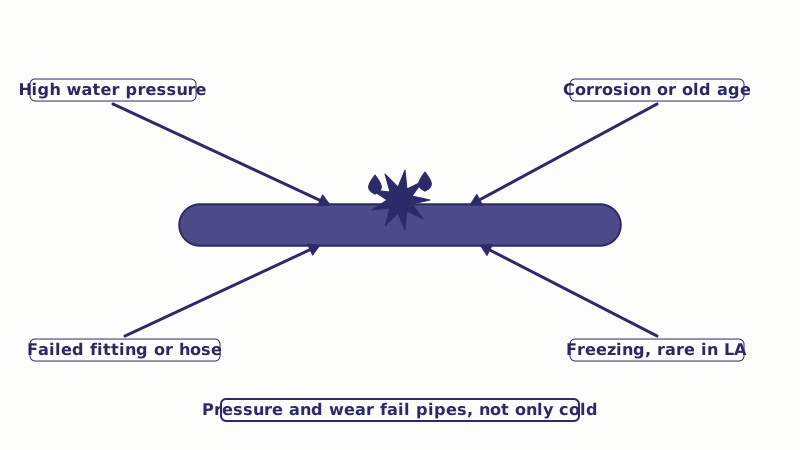
Common causes are pressure, corrosion, age, a failed fitting, or a washing machine or toilet supply line giving way. Freezing is less common here than in cold states, but not unknown. Pipes usually need sustained air temperatures at or below about 20 degrees Fahrenheit, and exposed pipes in attics or crawl spaces are the most at risk.
Water expands about 9 percent when it freezes, and plumbing industry sources note a pipe often bursts as it thaws, not while it freezes. If a pipe has frozen, shut off the water and call a plumber before you thaw it.
Our page on what causes a pipe to burst covers each cause, and how to tell whether a pipe has burst covers the signs, including leaks you cannot see. A burst sprinkler pipe outside is the same idea: shut off the irrigation supply and call a plumber, since the line may connect to the home's water supply.
Common questions
How cold does it have to be for pipes to burst?
Industry sources put the danger point at around 20 degrees Fahrenheit or lower, held for several hours, with exposed pipes in attics, crawl spaces and outside walls freezing first. Los Angeles seldom stays that cold for long, but foothill and valley nights can dip, and a wind can drive cold air into an unheated space. Insulating exposed pipe is cheap insurance.
How long does an emergency plumber take for a burst pipe?
It depends on the plumber, the time of day and the traffic, so ask for an arrival window when you book. No honest plumber can promise exact timing before seeing the pipe. Once on site, a repair in an accessible spot often takes a few hours, and a pipe in a wall or slab takes longer.
What should I ask before I hire someone for an emergency burst pipe?
Ask whether the price covers the call out, the repair and any wall opening. Ask about after-hours charges, whether a permit applies, and what happens if more damage is found. Ask for a written quote before work begins. For jobs of $1,000 or more, check the contractor's state license on the CSLB website.
Will insurance cover a burst pipe?
Often it covers the sudden damage that a burst causes, such as wet drywall and flooring, but not always the pipe itself, and slow leaks are often excluded. Policies differ, so read yours or call your agent. Report the loss quickly, photograph everything and take steps to stop further damage, which insurers expect.
Should I turn off the water heater after a burst pipe?
If the burst is on a line that feeds the water heater, or if the tank may run dry, switch off its power or set a gas unit to pilot. A heater that fires on an empty tank can be damaged. If you are unsure, turn it off and let the plumber advise on restarting.