Most homeowners in Los Angeles pay about $2,000 to $6,000 to repair a slab leak, with the spread coming from the method and how deep the damage goes. Locating the leak is usually $150 to $400 on top. A whole-house repipe, which some homes end up needing, runs $4,500 to $15,000 or more. Every figure is a guide drawn from published prices, and the plumber we arrange gives you a written quote after a visit. Cost is one part of the picture, so see the main page on plumbers for leaks for the whole process.
How much should a plumber cost to fix a leak?
A simple leak you can reach, such as a fixture, a supply line or an exposed pipe, usually costs a few hundred dollars. A leak in a wall adds opening and repairing the drywall. A leak under a concrete slab costs the most, with published Los Angeles prices commonly between $2,000 and $6,000 for a standard repair.
Here is how the main options compare, using prices published by Los Angeles plumbing businesses. They are rough, and the sources disagree, so treat them as a range to test a quote against.
| Method | Typical Los Angeles range | What it does |
|---|---|---|
| Leak detection | $150 to $400 | Pinpoints the leak before anything is opened |
| Spot repair through the slab | $2,000 to $4,500 | Cuts into the concrete, replaces one section of pipe |
| Reroute through walls or attic | $1,500 to $6,000 | Abandons the buried line and runs new pipe overhead |
| Epoxy lining | $1,500 to $8,000 | Coats the inside of existing pipe, no concrete cutting |
| Full repipe | $4,500 to $15,000 or more | Replaces the home's supply piping |
Several of those methods are compared in depth on the page about slab leak repair or repipe, including when each one makes sense.
What changes the price of a slab leak repair?
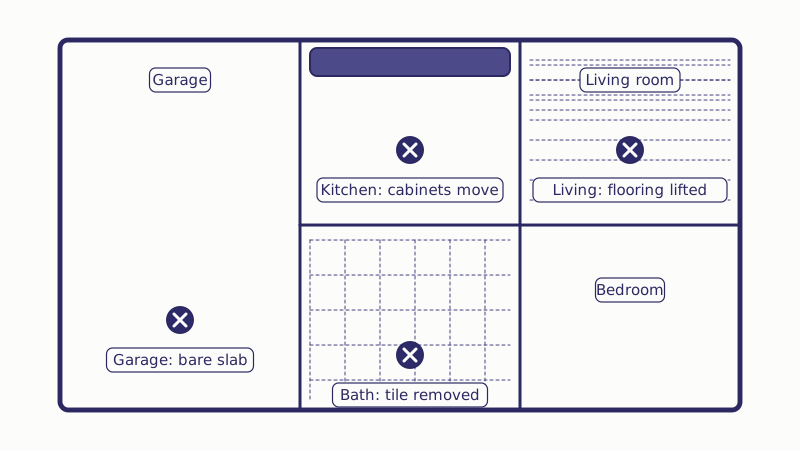
Four things do most of the work: where the leak sits, how many there are, how much finish work follows, and whether a permit applies. A leak under a kitchen with tile and cabinets costs more to reach than one under a bare garage floor. A second leak on the same line often shifts the plan from a spot repair to a reroute.
Access and floor finishes. Breaking out concrete is the easy part. Replacing tile, hardwood or built-in cabinets is where bills grow, and it is often priced as separate trades.
Number of leaks. Pipe that leaks once under a slab tends to leak again if it is the same age and material. Reroutes and repipes cost more up front and lower that risk.
Water damage. Drying out, replacing drywall and treating mold are not plumbing costs, but they arrive on the same project. Ask the plumber what the quote leaves out.
Permits. The Los Angeles Department of Building and Safety requires a plumbing permit for installation or modification of potable water piping. A reroute or repipe generally falls in that group, so ask whether the quote includes the permit and the inspection.
How much does it cost to repair a leaking pipe in a wall?
Expect a few hundred to a couple of thousand dollars, depending on how much wall is opened and what the pipe is made of. The plumbing repair itself is often quick. The drywall patch, texture and paint after it are usually where the cost lies, and they are often quoted separately.
A pinhole in a copper line is the typical case. A plumber finds the spot, opens a section of drywall, cuts out the damaged pipe and fits a new section. If the surrounding pipe is thin, the plumber may recommend replacing a longer run now, because patching one pinhole often leads to the next.
Your own check helps cost estimates. Mark where you see damp or staining and share when it started. A plumber can then aim the leak detection rather than opening several holes.
Will homeowners insurance pay for a burst pipe?
Often it pays for the water damage when the burst is sudden and accidental, but not for the failed pipe itself or a slow leak. Policies differ, and slab leaks are a common point of dispute. Report the loss to your insurer quickly, take photographs, and take reasonable steps to stop more damage.
The usual pattern is this. Sudden burst, such as a pipe splitting overnight, is more likely to be covered for the resulting damage. A leak that has run for months is often treated as wear and tear or maintenance. Coverage for cutting through the slab to reach the pipe varies by policy, so read the wording or call your agent before approving work.
A plumber's written report, with the leak location, the pipe condition and photographs, is useful evidence for a claim. Our guide to whether insurance covers a burst pipe goes through the details, and you can find official claim guidance on the California Department of Insurance website.
What kind of clamps can I use to stop pipe leaks?
A stainless steel repair clamp with a rubber gasket is the usual stopgap for a pinhole or small split on a straight section of pipe. It costs a few dollars at a hardware store. A clamp is temporary: it stops water for a short time and does not fix a failing pipe, a leaking joint or a leak under a slab.
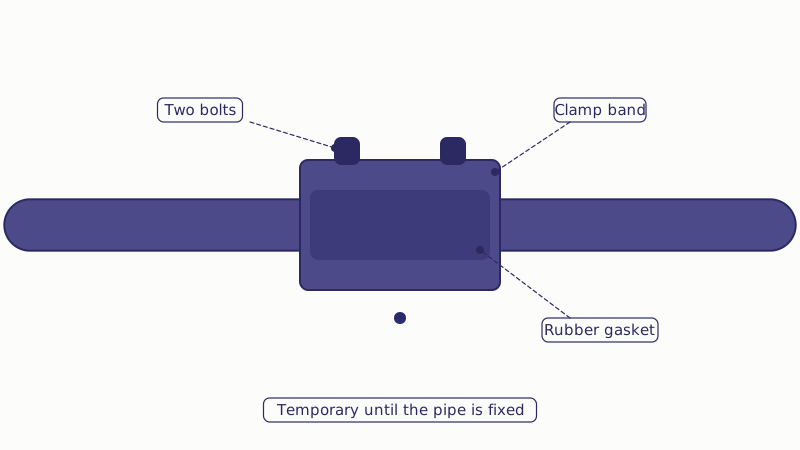
For a temporary repair on a leaking pipe, shut off the water, dry the pipe, fit the clamp over the damage, and tighten evenly. Then book a plumber to replace the section. Epoxy putty and silicone tape can slow a small drip on a dry pipe, but they rarely hold under full pressure.
If you need a longer-lasting repair on a leaking connection, the guides on repairing a copper pipe leak and fixing a leaking pipe joint show what a plumber does differently.
What is the most effective way to fix a leaking pipe?
Replace the damaged section with new pipe and proper fittings. That ends the leak at its source, while clamps and sealants only delay it. For a slab, the question is whether to spot repair, reroute or repipe, and the answer depends on how many leaks there are and how old the pipe is.
Published guides give a rule of thumb. One small leak in otherwise sound pipe suits a spot repair. Repeated leaks or aging copper point toward a reroute or repipe. Epoxy lining suits sound pipe with limited damage, and it works less well on pipe that is already badly corroded, so ask any plumber who proposes it how they will check the pipe first.
Before work starts, you should have a written quote that names the method, the permit, the finish work included and the payment schedule. California limits a down payment on a home improvement contract to the lesser of $1,000 or 10 percent of the price, with a few exceptions. The CSLB explains the rule in its guide to home improvement contracts.
Is there a slab leak repair cost calculator?
Online calculators give a ballpark, but they cannot see your pipe. They multiply a national average by a few options, so they can miss the factors that matter in Los Angeles, such as finish materials, access and whether a permit is needed. Use one to sense a range, then judge the real number from a written quote.
A better calculator is a comparison. Gather two or three written quotes that name the method, and line them up against the table above. If one is far below the others, ask what is left out. If one is far above, ask why a repipe is needed rather than a reroute or a spot repair.
Common questions
How long does slab leak repair take?
A spot repair or reroute is often finished in one to two days, plus time for flooring or drywall. A full repipe can take several days. Detection comes first and may be done the same visit. The plumber should give you a timeline in the written quote, because finish work from other trades can stretch the schedule beyond the plumbing.
What should I ask before I hire someone for slab leak repair?
Ask which method they recommend and why, whether the price includes the permit, flooring and drywall, how they will confirm the leak location, and what happens if a second leak shows up. Ask for the quote in writing, and check the contractor's state license number on the CSLB website. California requires a license for jobs of $1,000 or more.
Does someone need to be at the property?
Plan to be there for the start, to show the plumber where you noticed the problem, and for the walk-through at the end. Someone responsible should be present while work is under way, because the plumber may need access to the water meter, the main valve and the affected rooms. Ask how long they expect to need the water off.
What does temporary repair of a leaking pipe look like?
Shut off the water, dry the pipe, and fit a repair clamp or self-fusing tape over the damage. It buys time, not a fix. A plumber then replaces the section. If you cannot stop the leak, shut off the main and call a plumber. For a leak under a slab, a temporary wrap does not apply.
Is a slab leak repair cost higher in older homes?
It can be. Older pipe may be corroded in several places, so a plumber may recommend a reroute or repipe rather than a spot repair. Access also affects the price, since an older home may have tile or hardwood over the slab that must be removed and replaced. Your quote should show the pipe condition the plumber found.