If you find gray or blue plastic water pipe stamped PB2110 in your house, plan to replace it. It has failed in many houses nationwide, the cause is chemical, and you cannot see the damage from outside the pipe. Replacement is a repipe, and it follows the same permit, access and price rules as any other. The wider guide is repiping a house in Los Angeles. Below is what is particular to polybutylene.
How do you know if you have polybutylene pipe?
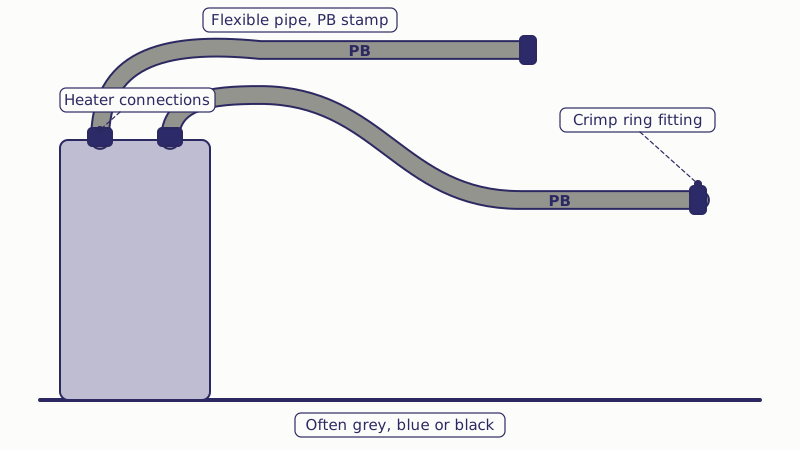
Polybutylene, or PB, is flexible plastic pipe, usually gray inside houses and blue for the underground line from the meter. It was commonly installed from the late 1970s to the mid 1990s, and it is usually stamped with the code PB2110. Look under sinks, at the water heater, near the main shutoff and in the garage or crawl space.
Do not rely on color alone. Some new PEX is also gray or blue, so identification comes down to the printed stamp on the pipe. Plumbing fittings matter too. PB systems used plastic acetal fittings or copper crimp rings, and those fittings have their own failures.
If the pipe is hidden, check the line at the water heater, where it connects. A home inspector can also identify it. If you are buying, the seller's disclosure should say.
Why does polybutylene fail?
Chlorine and other oxidants in municipal water attack the plastic from the inside, creating tiny cracks, and hot water speeds the reaction. The plastic fittings also crack. The pipe can look fine from outside and still fail suddenly, often at the fittings or in a long, slow weep.
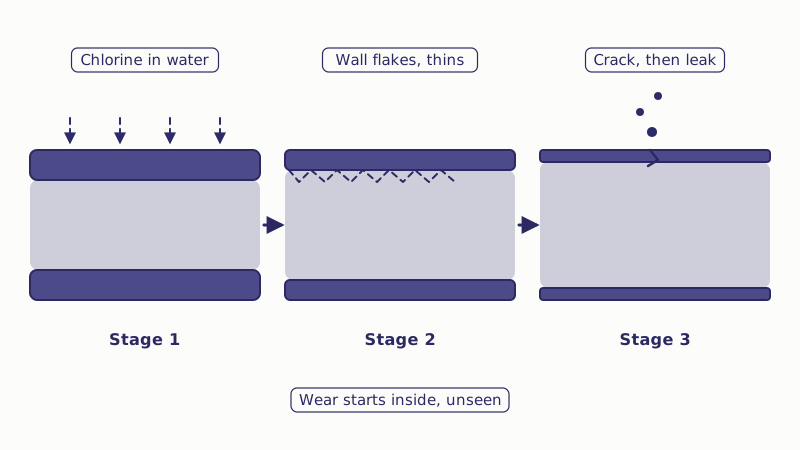
Los Angeles tap water is disinfected, and LADWP says it is expanding chloramine across its whole system. Chloramine is a chlorine-ammonia compound, and sources on polybutylene failure point to chlorine and chloramine as the oxidants that degrade the plastic. Not every house has had a failure, and some systems last decades, but the risk does not shrink with time.
A 1994 annual report filed with the SEC by Eljer Industries describes lawsuits over the Qest polybutylene plumbing system that its subsidiary U.S. Brass had sold since 1979. The pipe was the subject of large national litigation in the 1990s.
Can you get the class action settlement money?
No. The national settlement that once paid for replacements closed years ago. Sources give a final claim deadline around 2009, though we could not find a primary document that confirms the date. Assume that you are paying for the repipe yourself, and do not count on a claim.
That also means that sellers cannot point to a fund. If you bought a house with polybutylene, your inspection report and disclosure are the starting point, and your insurer will ask about it. For buyers, the cost is a negotiating point and a reason to price a repipe into the offer.
Will insurance cover polybutylene or drop me?
Many insurers decline to write or renew a policy while polybutylene is in the house, or they charge more, or require replacement within a set time, according to inspection and repipe company guidance. Policies differ, so ask your own agent what they require and in what timeframe, in writing.
Insurance usually pays for water damage from a sudden failure, but not always for the pipe itself, and it can deny a claim after repeated leaks. That is why many owners replace PB before a leak rather than after. Read your policy for wording on plumbing materials. If a plumber writes a report that the pipe is replaced and permitted, send it to the insurer.
The nearby topic of burst water pipes covers the immediate steps if one fails today.
What does polybutylene pipe replacement cost?
Polybutylene replacement is priced as a repipe: about $4,000 to $10,000 for a 2,000 square foot, two-bath house in PEX and $8,000 to $18,000 in copper, based on published guides. Access, the number of fixtures, a second story or a slab foundation move the price. A written quote after a visit is the real number.
Polybutylene runs are usually easier to remove than steel, because the pipe is flexible and many installations ran through attics and crawl spaces. Some plumbers will cut out the old pipe and some will cap it in place. Ask which one is in the quote, and whether the plastic fittings at the water heater and manifold are replaced as part of the job.
The detail on price drivers sits on the page for repipe house cost and the PEX line is on PEX repipe cost.
Do you need a permit and a plumber with a state license?
Yes. Replacing the water supply lines in a Los Angeles house needs a LADBS plumbing permit and an inspection before walls close, and the work is plumbing contractor work in California. Check the license at the California Contractors State License Board, cslb.ca.gov, before you sign anything.
The permit protects you in two ways: an inspector checks the pressure test and the installation, and the record helps with insurance and resale. A plumber who suggests skipping it is giving you a reason to look elsewhere. An owner-builder may be able to pull a permit for their own home, but this is a large job and the rules are strict, so ask LADBS what it allows before starting.
Keep the permit sign-off, the inspection record and the pipe and fitting brand in one folder. Insurers and buyers ask for them.
What replaces polybutylene?
Most Los Angeles repipes use PEX, and copper is the other choice. Either removes the chlorine failure mode and the plastic acetal fittings that gave PB trouble. The comparison is on the page for PEX versus copper, and the differences between PEX types are in PEX A versus PEX B.
One caution. PEX has had its own fitting controversies and its own limits: it should not sit in sunlight, and it has to be installed to the manufacturer's rules. The pipe is not the only thing that decides how long it lasts. The installer and the fittings matter just as much.
Common questions
Is polybutylene still legal in Los Angeles?
Polybutylene was used in new houses only until about the mid 1990s, and today new work is done in PEX, copper or other materials the code lists. We found no rule that forces an owner to pull existing pipe out, but insurers, lenders and buyers treat it as a problem. A repipe needs a permit, so ask LADBS about current rules.
How long does polybutylene pipe last?
There is no fixed lifespan. Failures began within years in some houses and not for decades in others, depending on the water chemistry, temperature and fittings. The risk is cumulative, because the pipe degrades from the inside, so most plumbers advise replacement instead of waiting for a leak that can flood a wall.
Can I replace only part of my polybutylene plumbing?
You can, but a partial replacement leaves you with mixed materials and does not remove the insurance problem. If one run fails and the rest is hidden, replacing it with PEX or copper is a reasonable stopgap. Many owners replace everything in one job, which costs less per fixture than doing it in pieces.
Does polybutylene pipe have to be removed from the walls?
No, usually not. Plumbers commonly disconnect and cap the old pipe and leave it where it is, then run new lines. Make sure the old pipe is capped at both ends and cannot be repressurized, because an old line that still has water pressure can leak into a wall.
How do I get quotes for polybutylene replacement?
Tell the plumber what you found, where, and the house size and foundation type. They will visit, check every fixture and give a written quote with the permit, material and patching spelled out. The quote page is where to start, and the full guide to repiping lists what to ask.