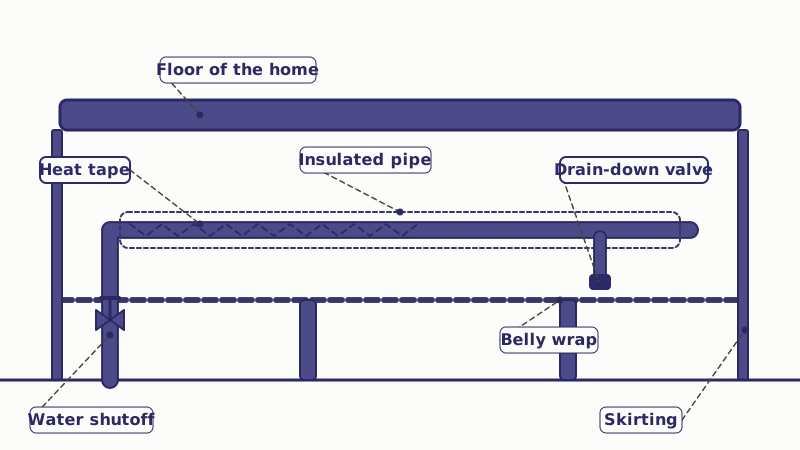
Winterizing a mobile home in Los Angeles is mostly insulation and a plan: wrap the exposed pipes, close the gaps in the skirting, know where the main valve is and have a cold-night routine. Most of it is cheap and you can do it yourself. For the rest, a local plumber comes to you. If you want to see what else we arrange, start at the plumber home page.
Does a mobile home in Los Angeles need winterizing?
Yes, lightly. Most of the Los Angeles basin rarely freezes, but manufactured homes are more exposed than houses because supply lines run in the underbelly and along exterior walls, and loose skirting lets cold air circulate. Hillside, valley-edge and higher-elevation parks see colder nights than the coast, so check your park's conditions.
A frozen line can split a pipe or a fitting, and the failure shows up at thaw. The cost of one burst, in water damage and flooring, is far larger than the cost of a roll of foam insulation. Winterizing is maintenance you do once in the fall and check after a cold snap.
If the home is vacant over winter, the plan changes: drain the system rather than insulate it. Both versions are below.
How do you insulate mobile home pipes?
Wrap exposed supply lines in foam pipe sleeves, close any gaps in the skirting and the underbelly cover, insulate lines in exterior walls and under sinks, and add heat tape in the coldest spots. Use tape rated for your pipe material and follow its instructions, and keep insulation dry.
The underbelly is the weak point. A torn belly wrap, a missing access panel or cracked skirting lets cold air in, and published guidance notes that this can freeze pipes within hours even when the heat is on inside. Fix those first. Then wrap the lines you can reach, especially near the water heater, the hookup and the cold-water inlet.
Use flexible insulation, such as foam sleeves, so the pipes can still move. Open the cabinet doors under sinks on a cold night so warm air reaches the pipes. Keep a faucet dripping on the far end of the home if a hard freeze is forecast.
How do you winterize a vacant mobile home?
Shut off the water at the main valve, drain the lines by opening every faucet and flushing toilets, drain the water heater, turn off its power or gas control and add non-toxic plumbing antifreeze to the traps. Open the lowest drain valve if your home has one. Keep it all written down for the spring.
Do not use automotive antifreeze in the plumbing. Use only plumbing or RV antifreeze labeled for potable systems. Disconnect any hoses, and cover the hose bib. If you are unsure about the order or have a gas water heater, ask a plumber. Gas control settings and relighting a pilot are plumber or utility work.
Check the home during the winter if you can, and after any storm that breaks the skirting or the belly wrap. A vacant home with a slow leak can do a lot of damage before anyone looks.
What do the valves and shutoffs do in a mobile home?
A mobile home has a main shutoff where water enters, usually at the park's connection or at the hookup near the home, and shutoff valves at the water heater, toilets and sinks. Know where the main valve is and that it turns. Test the fixture valves once a year so they do not seize.
The park may own and maintain the line to the home, and the home's own plumbing starts at the connector. HCD, the state housing agency, says the water supply connector should be a flexible material approved for potable water, such as soft copper not less than half an inch in diameter, and that a shutoff valve must be installed. Check your connector for wear and kinks. Whether your park is family-owned or corporate-run, its rules decide who may work on the connection, so ask the manager before you touch it.
If a valve will not turn or drips from the stem, replacing it is routine work for a plumber. The costs run like any valve job, which the page on replacing a shut-off valve explains.
How do mobile home plumbing vents and vent caps work?
Drain lines in a manufactured home need vents so that water flows without gurgling or sucking traps dry. The vents usually rise through the roof, and a cap or a vent stack keeps weather and animals out. A blocked or missing vent causes slow drains, gurgling and sewer smell inside.
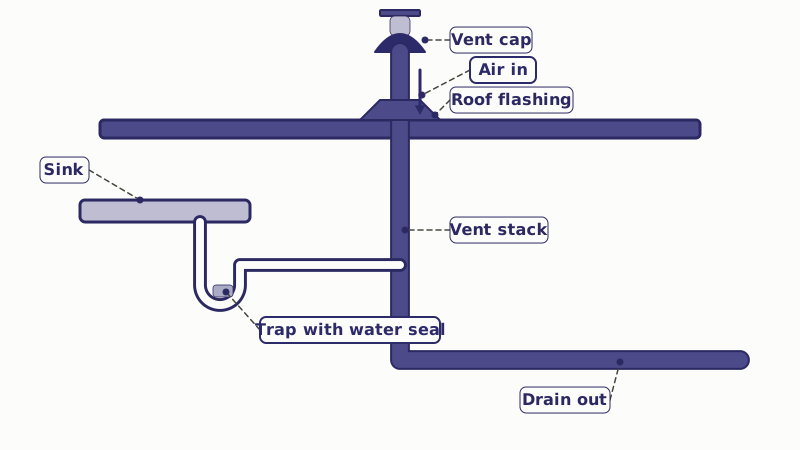
To check a vent, look at the roof from a ladder if it is safe, or hire someone. You are looking for a missing cap, a crack where the pipe meets the roof, a nest or debris and a loose seal. A cracked or unsealed roof penetration also leaks rain into the ceiling. Do not walk on a mobile home roof, which may not take your weight.
Smell near a drain is often a trap that has dried out, a blocked vent or a venting problem. Pour water into unused drains to refill traps. If the smell stays, see the pages on sewer smell and how to get rid of sewer smell in the house.
What does mobile home plumbing look like, and what goes wrong?
Supply lines are usually PEX or copper, run through the underbelly to fixtures, with plastic drain pipe and vents above. A schematic is a map of those runs and it is rarely on file, so a plumber traces the lines. Common problems are freeze damage, leaking connectors, failing fittings, slow drains and low pressure.
Layouts differ by age and builder. Older homes may have systems that were patched many times, and some homes built in an era of plastic fittings suffer from fitting failures, which is a general pattern noted by plumbers rather than a rule. If your home has recurring leaks, ask a plumber about the whole supply, in the same way as the repipe question on a house. The comparison between pipe types is on PEX versus copper.
Repairs and alterations to a mobile home fall under state rules. HCD issues permits for alterations to the home itself, and a repair with original parts may not need one, so confirm with HCD at (800) 952-8356 before replacing pipes. Park rules can add to that.
What does a maintenance plumber do for a mobile home?
A maintenance plumber checks the connector and valves, looks for leaks under the home and at fixtures, tests the water heater's relief valve and inspects vents, traps and pipe insulation. They fix small problems before they fail, and write a short list of anything bigger. It is routine upkeep, done on a schedule or before winter.
A visit costs what a plumber charges for an inspection and small repairs, which varies, and the page on plumber inspection cost covers typical charges. Ask for the work to be listed. We arrange for a local plumber to visit and give you a written quote before any work starts.
Common questions
What temperature do mobile home pipes freeze at?
Water freezes at 32 degrees Fahrenheit, but pipes in an underbelly or exterior wall can freeze when the air outside stays below freezing for several hours, depending on wind, insulation and the condition of the skirting. In Los Angeles that is uncommon, but it happens in colder parks. Prepare ahead of a forecast freeze.
Should I leave a faucet dripping on a cold night?
Yes, a slow drip at the faucet farthest from where water enters keeps water moving and can prevent a freeze, which is a common recommendation. It uses a little water. Open the cabinet doors under sinks, keep the heat on and check the skirting and belly wrap before the night.
Can I use heat tape on a mobile home pipe?
Yes, if the tape is rated for your pipe material and installed per the instructions. Do not overlap it and do not wrap it over itself. Keep it dry and replace it if it is damaged. Wrap insulation over the tape. If you are unsure, ask a plumber or electrician.
Do I need a permit to repair mobile home plumbing in California?
HCD, not the city, issues permits for alterations to a mobilehome, and its booklet says a repair with original parts may not need one. Anything that changes the plumbing needs a permit, and a park may require operator approval. Call HCD at (800) 952-8356 to confirm before you start.
Who fixes mobile home plumbing in Los Angeles?
A plumbing contractor, checked at cslb.ca.gov for a valid license, does anything beyond a small repair. Ask whether they work on manufactured homes and whether the park has rules. To start, use the quote page and a local plumber will come to you.