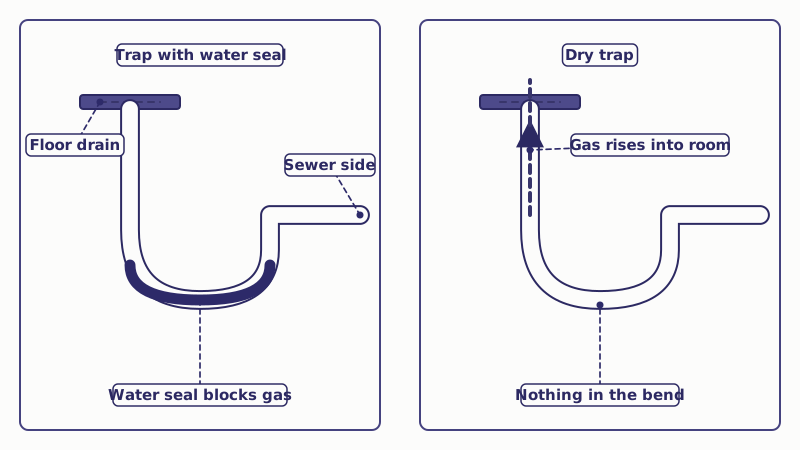
We arrange help with this plumbing problem across Los Angeles, as covered on our plumbing services overview. You need a plumber for a sewer smell when the cheap checks fail: you have run water in every drain, nothing rocks at the toilet base, and the house still smells like a sewer. By then the cause sits in the walls, the vents or the sewer line, and a plumber with a drain camera finds it faster than guessing. The visit can be set up through the quote page, and the sewer line repair page covers the wider range of jobs.
If the smell is strong, you feel unwell or you hear hissing, treat it as natural gas first: leave, then phone SoCalGas on 1-800-427-2200 once you are outside.
What are four signs that your sewer line is broken?
Sewer line trouble tends to appear in four ways: drains that slow down in more than one fixture at once, gurgling sounds from toilets or tubs, a sewage smell indoors or outdoors, and wet, sunken or unusually green ground above the line. Any two together mean you should book a camera inspection.
The reasoning behind each sign helps you tell it from a single clogged sink:
- Several drains slow together. A single slow sink is a local clog. A tub, a toilet and a laundry drain all slowing means the shared line is restricted.
- Gurgling. Air is being pushed back through traps because water cannot move down the line.
- Smell. Gas escapes through a crack, a failed joint or a collapsed section.
- Ground changes. Water leaking from a cracked underground pipe can soften soil or feed grass, which shows up in a yard or planter bed over the line.
Backups into a floor drain or shower are the fifth sign, and the most urgent. Stop using water and see our page on what to do in a plumbing emergency.
Who do you call for a sewer smell in Los Angeles?
For smell inside the house, call a plumber. When the sewage smell is out on the street or comes from a manhole, call LA Sanitation. The city owns the public main beneath the street. The private lateral between the house and the public main is yours, and that is where most household sewer smells start.
LA Sanitation states that the owner must maintain and repair the entire lateral, including the stretch beneath the sidewalk and street, and that the city offers no financial help for lateral repairs. For public sewer odors it lists a round-the-clock customer care number, 1-800-773-2489.
So if a neighbor's block smells too, report it. If the smell is in your bathroom or garage floor drain, it is almost always yours to sort out. A camera inspection shows where the pipe leaves the house and what it connects to.
What does a plumber check when your house smells like sewer?
A plumber checks the cheap causes first: dry traps, toilet seals and vent pipes. Then they send a camera through a cleanout or drain to look inside the line, looking for roots, cracks, offset joints, sags that hold water, and scale or grease build-up. The camera result decides whether the fix is a cleaning or a repair.
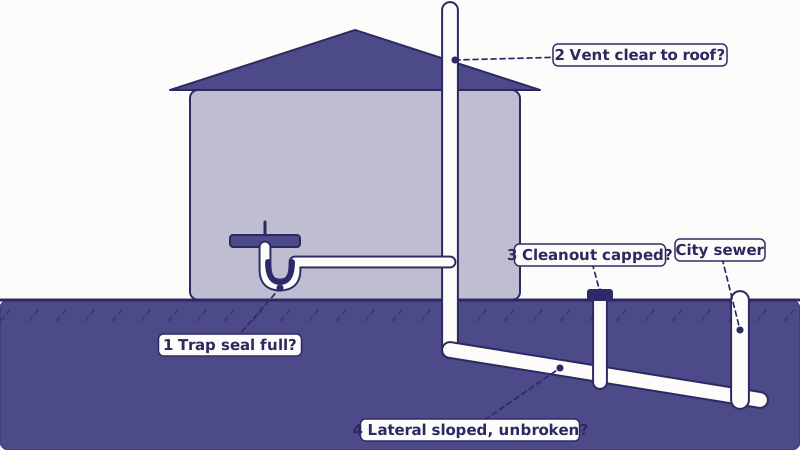
Here is how the visit tends to run, so nothing surprises you:
- Questions. Where is it strongest, when did it start, any gurgling or slow drains? Your notes help here.
- Fixture checks. Water in every trap, a rock test on each toilet, a look at the vent pipes you can reach.
- Camera inspection. A flexible camera goes into a cleanout, or into the drain after a toilet is pulled. Roots show as dense fibrous mats at joints. Cracks and joint offsets show as dark gaps or steps.
- Findings. You see the footage or stills and hear which of three outcomes it is: a minor fix, a cleaning, or a repair or replacement of part of the line.
- Written quote. Any work beyond the inspection is priced before it starts.
Check whether the first visit price covers the camera inspection or bills it on top. Published Los Angeles plumber rates run about $95 to $200 an hour, with a service call fee often listed at $75 to $150, so a diagnosis visit is usually priced as a service call plus time.
Does a sewer smell always mean sewer line repair?
No. Most sewer smells are not a failed line. They are dry traps, loose toilet seals and vent problems, and those are cheap to fix. Sewer line repair is the answer when the camera shows damage, such as a crack, a separated joint, a belly that holds water, or roots forcing through a joint.
Roots are a well-known sewer line problem. They enter at joints and grow into a mat that catches paper and waste. Cleaning removes the blockage, but if the pipe is cracked the roots return, which is when a spot repair or lining is discussed. We do not guess costs for those before a camera result, because the range depends on depth, length and access.
California law matters here. The Contractors State License Board says a contractor license is required for any contract of $1,000 or above, labor and materials combined, and also for any job requiring a permit, whatever the cost. Main drain line work usually lands in that range, so request the license number and verify it with CSLB online before agreeing.
Is sewer smell in the house dangerous?
Mostly it is a nuisance rather than an emergency. At the low levels leaking through a dry trap, sewer gas can cause headaches, nausea or irritated eyes. But hydrogen sulfide in higher doses is hazardous and deadens your sense of smell, so do not judge safety by how bad it smells.
The CDC's ATSDR describes hydrogen sulfide as a gas that smells like rotten eggs at tiny concentrations, with effects from eye irritation and headache at lower exposures to serious harm at high ones. Sewer gas also contains flammable methane. Open windows, keep ignition sources away from the area, and leave if the smell is overwhelming or anyone feels dizzy.
Do not mix drain cleaners or pour chemicals into a drain you suspect is blocked, because a plumber working on the line afterward may be exposed to the leftover chemicals.
What happens next if you want a plumber?
Send the details through the quote page: which room, how long, any backups. A local plumber visits, and a written quote follows the inspection, ahead of any repair. Our how a job runs page shows the steps from first message to finished work.
If a sewage backup is already happening, do not wait for a regular slot. Our emergency plumber page lists what to do while help is on the way, and the plumber cost guide shows what typical jobs run so you can compare. For a full overview of the service, see City of Angels Plumbing.
Common questions
How much time does a sewer smell visit take?
Times vary with the house, so ask when you book. A basic check of traps, toilets and vents is usually the shorter part, and a camera run through the line adds time depending on access and length. Damage on camera leads to a repair booked once you approve a written quote.
Which questions are worth asking before booking a sewer smell visit?
Find out if a camera inspection is part of the visit and its cost, if you get the footage, what the service call fee covers, and the contractor's CSLB license number. Also ask who handles any permit, since some sewer work needs one issued by the city.
Must someone be at the house during the visit?
Yes, or an adult you trust must be. The plumber must reach every bathroom, the laundry area and any cleanouts, and you will want to watch the camera findings. Move stored items away from floor drains and cleanout covers before the visit.
Why does the sewer odor in my house come and go?
Marginal trap seals can be pulled past by wind over the roof vent, pressure changes before weather, or an exhaust fan drawing air. The smell comes and goes with those conditions. Running water in rarely used drains often stops it, and a plumber can check the vents if it keeps returning.