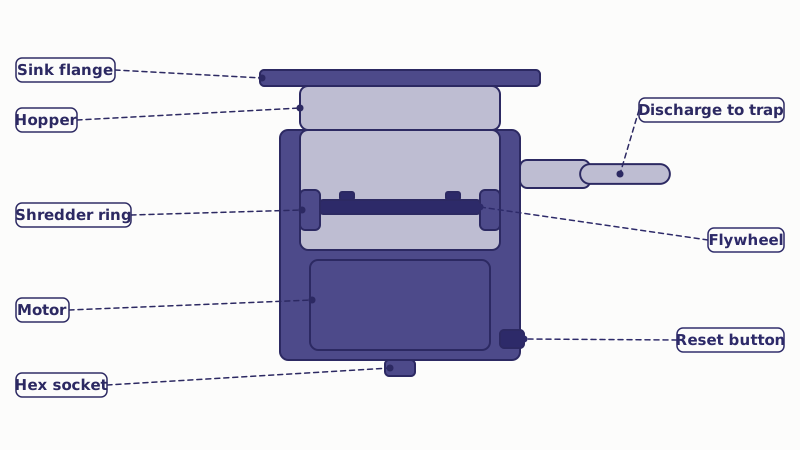
To unclog a garbage disposal drain, switch the disposal off at the wall, then check whether the blades are jammed or the pipe below is blocked. A humming motor means a jam: free it with the hex key socket under the unit. Water that will not leave the sink means a clog: plunge, then clear the trap. This guide sits inside our drain cleaning and clogs help and takes about thirty minutes if nothing is broken.
Is my garbage disposal jammed or is the drain clogged?
A jam and a clog look similar at the sink but have different causes. If the motor hums or clicks when you flip the switch and nothing turns, the grinding plate is jammed. If the motor runs freely but water sits in the sink or comes up in the other basin, the drain line beyond the disposal is blocked.
Use this quick check:
| What you see or hear | Likely cause | First step |
|---|---|---|
| Humming, no grinding | Jammed plate | Power off, use hex key |
| Total silence, no hum | Tripped reset or no power | Reset button, outlet, breaker |
| Runs fine, water drains slowly | Clog in trap or branch drain | Plunge, clear trap |
| Water comes up in the second sink | Clog past the disposal | Clear the line |
| Smell with no clog | Residue on the housing | Clean the baffle |
A disposal is an electric device that grinds food waste so it can be flushed through the household drain, and it does not replace a trash can. Grinding is not the same as dissolving: fibrous scraps, grease and starch still collect in the pipe downstream.
How do I safely free a jammed disposal with a hex key?
Turn the disposal off, then unplug it or switch off its breaker, before you do anything else. Never put a hand into a disposal, even when it is off. Most units have a hex socket at the center of the underside, and turning it back and forth by hand frees the flywheel.
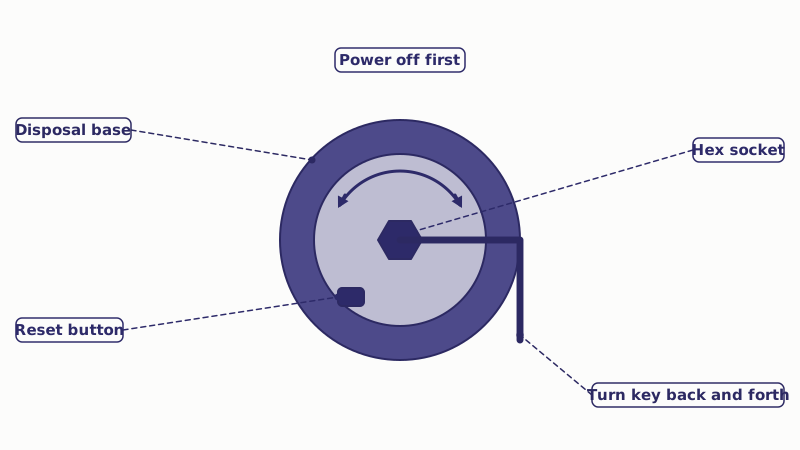
- Switch off at the wall, then unplug under the sink or flip the breaker.
- Shine a flashlight down the drain and lift out any visible object with tongs or pliers.
- Crouch under the sink and find the hex socket in the middle of the base.
- Fit a hex wrench, often a quarter inch, and work it back and forth until it turns a full circle.
- Remove the wrench, wait a few minutes for the motor to cool, and press the red reset button on the underside until it clicks.
- Restore power, run cold water and test it.
Manufacturers such as InSinkErator describe this same wrench and reset routine in their support pages. If the button pops out again at once, the motor may be overloaded or failing. Do not keep pressing it.
How do I unclog a garbage disposal that is full of water?
Fill-and-hold water means the clog is beyond the blades. With power off, push out visible debris, then use a plunger on the drain opening. Block the second sink drain or the dishwasher hose with a wet cloth so pressure goes into the clog, then plunge hard for twenty seconds. A plunger is a tool made to clear blockages in drains and pipes.
If plunging fails, open the trap. Put a bucket under the P-trap, loosen the slip nuts by hand, pull the trap and empty it. Rinse it, check the short tail pipe that leads to the wall, and refit with the washers seated. Run hot tap water and check for leaks at each joint. A drain snake can reach further if the clog is still in the wall pipe. Our kitchen sink unclogging guide covers the snake in more detail.
Can I use drain cleaner in a garbage disposal?
Do not use chemical drain cleaner in a disposal or in a sink that holds standing water. Lye-based products are very caustic and can burn skin and lungs, and the poison center says never to mix cleaning products. A jammed disposal also holds the chemical against the housing and seals, and splashback can reach your hands and eyes.
If chemical has been poured, tell any plumber before they open the pipe, because it is a hazard for them. If you or someone else is splashed or inhales fumes, move to fresh air, rinse the skin or eyes with water and call Poison Control at 1-800-222-1222.
A better approach is mechanical: plunge, trap and snake. If you still want something gentler for odor, grind a few citrus peels with cold water. That freshens the smell but will not clear a clog.
What should never go down a garbage disposal?
Anything fibrous, starchy or greasy is likely to cause the next clog. These items travel past the blades and settle in the horizontal pipe below, where they bind together into a plug that the blades cannot touch. Treat the disposal as a tool for small soft scraps, and keep the following out of it:
- Cooking grease, oil and fat.
- Coffee grounds in large amounts.
- Eggshells, celery, corn husks and onion skins.
- Pasta, rice and potato peels.
- Bones, fruit pits and anything hard.
- Non-food items such as bottle caps, twist ties and sponges.
Run cold water before, during and for about fifteen seconds after use so the waste is carried down the line. Grease is the biggest problem. It runs as a liquid while warm and hardens in the cold pipe, which is why kitchens and restaurants in the City of Los Angeles fall under LA Sanitation's Fats, Oils and Grease program. At home, wipe greasy pans and put the fat in the trash.
When should I call a plumber for a clogged disposal?
Call a plumber if the disposal leaks from the body, the motor smells burnt or trips repeatedly, or the clog returns within days. Also call if both kitchen sink drains back up, since that can mean a blockage further down the line than a trap clear will reach.
Stop DIY when you meet any of these:
- The hex key will not turn, or the unit is rusted through.
- Water leaks from the bottom or the flange.
- Sewage smell or backup in other drains, which points to the main line.
- You are unsure about the electrical connection.
Cost depends on the problem. The plumber cost to unclog a sink page gives a guide, and garbage disposal repair covers replacement. Request a visit through our quote page and we'll arrange a local plumber to come to you. If you ever smell gas near the kitchen, leave the building and call SoCalGas at 1-800-427-2200 from outside.
Common questions
Why is my garbage disposal humming but not spinning?
The grinding plate is jammed. Switch off and unplug the unit, then free it with the hex wrench in the socket on the underside, working it back and forth until it turns. Remove any object with tongs, wait for the motor to cool and press the reset button. Never reach in by hand.
Where is the reset button on a garbage disposal?
It is a small red button on the underside or lower side of the unit, found by crouching under the sink. It trips when the motor overheats or overloads. Wait a few minutes after a jam, then press it firmly until it clicks. If it trips again straight away, the disposal may be failing.
Can vinegar and baking soda unclog a garbage disposal?
They may help with light odor or film, but they are not a reliable fix for a real clog and the fizz does not push out a plug of food and grease. If water is not draining, plunging and clearing the trap work better. Do not combine household chemicals with commercial drain cleaner.
How do I stop my garbage disposal clogging again?
Keep grease, fibrous scraps, rice and pasta out, run plenty of cold water while grinding and for fifteen seconds afterward, and feed scraps in small amounts. Once a month, clear the baffle and check the trap for buildup. A disposal helps with small scraps, but a trash or compost bin takes the rest.
How long does it take to unclog a garbage disposal?
A jam usually takes ten to fifteen minutes with the hex key and reset button. A clog that needs the trap cleared often takes thirty minutes to an hour with bucket, rinsing and refitting. If it still does not drain, a plumber with a larger snake can usually finish the job during one visit.