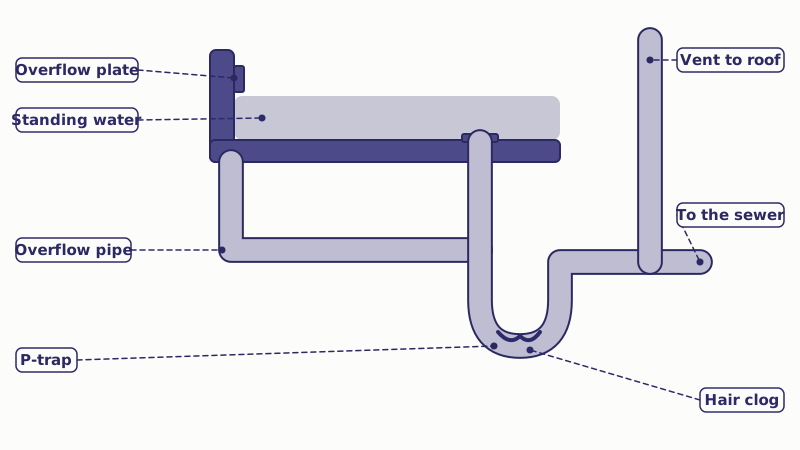
To drain a clogged tub, first clear hair from the stopper and the drain opening, then plunge with the overflow plate blocked. If the water still sits, remove the stopper hardware and pull the plug with a drain claw or a hand auger. Most tub clogs sit within the first couple of feet. This guide belongs to our clogs and drain cleaning section.
How do I drain a bathtub with standing water?
Remove the standing water if you can, using a cup or small pail, so you can see the drain. Then take out the stopper, lift hair from the strainer and plunge. The standing water actually helps a plunger, as the cup needs an inch of water over it to seal.
- Bail out most of the water, leaving enough to cover a plunger cup.
- Remove the strainer or lift the stopper out, then drag the hair free with your fingers or a claw.
- Block the overflow plate on the front of the tub with a wet rag.
- Plunge with firm, even strokes for 15 to 20 seconds, keeping the seal.
- Pull the plunger away sharply and see if the water starts to move.
- Repeat up to five times, then rinse the drain with hot water from the tap.
A plunger works by pressure and suction to dislodge a blockage in the pipe. For a tub, a flat-bottomed cup plunger is the usual choice, not the flanged type made for toilets. If the water level moves at all, you are making progress.
What type of tub stopper do I have, and how do I remove it?
Tub stoppers come in a handful of types, and each is taken out differently. Check yours before you pull on it, because forcing the wrong one cracks plastic. The right removal gives you access to the hair trapped just underneath.
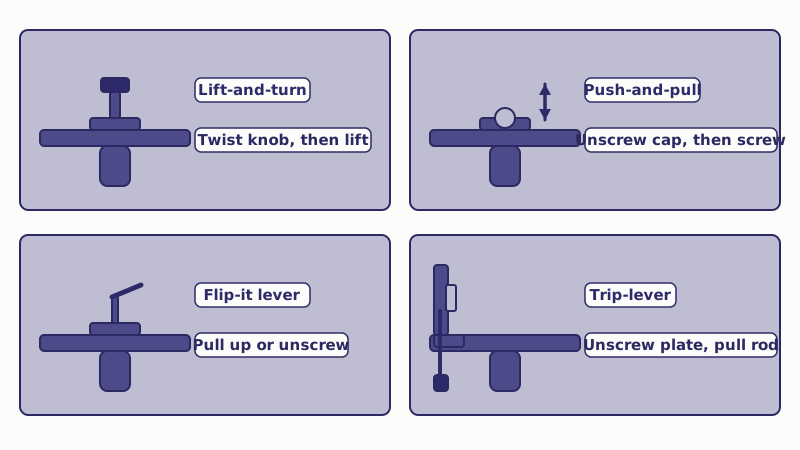
- Lift-and-turn: the knob on top turns counterclockwise, then the stopper lifts out.
- Push-and-pull or toe-touch: unscrew the cap, then the small screw below it.
- Flip-it lever: pull straight up on the lever and its assembly, or unscrew it.
- Trip-lever (the handle on the overflow plate): take the plate off with a screwdriver, then draw the linkage and plunger up through the overflow opening.
- Drain strainer or grid: unscrew the center screw or turn it with pliers.
Trip-lever stoppers are the most common cause of a tub that slows down, since hair wraps around the plunger rod inside the overflow. Pull the linkage out, wipe it clean, check the rod moves freely and refit it. Many people then find the tub drains at normal speed again.
What if the tub is still clogged after plunging?
If plunging fails, the plug is deeper, so use a drain claw or a hand auger. Feed it through the drain opening or the overflow hole, turn it as it goes, and pull it back to bring the hair and scum with it. Several passes may be needed before the water moves.
A drain auger, also called a plumber's snake, is a flexible tool that breaks up a clog or hooks it out of the pipe. Use gentle pressure. A tub trap is a tight bend, and if the cable stops, back off and try again rather than forcing it. Run hot tap water after each pass and watch how it drains.
If you have fed in about three feet and the blockage remains, or the tub clears and clogs again in days, stop. The plug may be beyond a hand tool, or the pipe could be damaged. Our guide to unclogging a shower drain works the same way and has more tips.
How do I fix a tub clogged with hair?
A tub clogged with hair is cleared by pulling the hair out, not pushing it down. Remove the stopper, take out the visible mat with a claw or bent wire, and snake the top foot or two of the pipe. Afterward, flush with hot water to carry loose scum along.
Hair is the main reason tubs clog, because the tub drain is wider than a sink's but sits below a stopper that collects strands. Wash the stopper every few weeks. A cheap mesh drain catcher stops most of the hair before it goes down, and costs only a few dollars.
If the water is also draining slowly from the sink, shower or toilet on the same line, the problem is not hair in the tub. It may be in the branch drain. If you also notice an odor, how to get rid of a sewer smell explains what to do.
Do home remedies unclog a drain that is deep in the pipe?
Home remedies rarely clear a deep clog. Baking soda and vinegar, salt or hot water may help with a light film of soap, but they do not remove a mat of hair or a plug that sits far down. For a deep clog, mechanical tools, meaning a longer auger or a plumber's machine, are the dependable fix.
Avoid chemical drain openers as the next step. The National Capital Poison Center warns that lye products are very caustic, that they injure skin and lungs, and that cleaning products should never be mixed. Standing water makes things worse because the chemical sits in the tub and splashes when you work. Should a product have gone down the drain already, mention it to the plumber.
When several fixtures drain slowly, or sewage surfaces at the bottom-most drain, suspect the main line. Inside Los Angeles city limits the owner generally looks after the private sewer lateral running from the house out to the street tie-in, and LA Sanitation looks after the public main. A plumber can tell which you have.
Can the same methods clear a slow sink or P-trap?
Yes. The same rules apply to a slow bathroom or kitchen sink: remove what you can see, plunge with the overflow blocked, then open the P-trap. The trap is the U-shaped pipe under the basin, and it holds the plug in most clogs that sit under a sink.
For a bathroom sink P-trap, set a bucket underneath, loosen both slip nuts, lower the trap, clear it and refit. For a slow kitchen sink, the cause is usually grease and food rather than hair, and our slow-draining kitchen sink guide covers it. Do not combine methods with chemicals, because the fumes and splashback can injure you.
When should I call a plumber for a clogged tub?
Call a plumber if the tub stays full after a snake pass, if other fixtures are slow too, or if you smell sewage. Also call if water backs up through the lowest drain of the house, since that points to the main line.
Other signs to stop DIY: a cracked stopper housing, a leak under the tub, or a cable that will not move. A local plumber can be arranged to visit, and you can send a request on the quote page. For a guide to what clearing a drain costs, read plumber cost to unclog a sink. The home page explains how a job runs.
Common questions
Why is my tub draining slowly?
Most slow tubs have hair and soap scum building up around the stopper, in the overflow linkage or in the trap just below. Mineral buildup narrows the pipe over time. Start with the stopper and the first foot of the drain. If that is clear and it is still slow, the clog is further down the line.
Can I use a plunger on a tub?
Yes, and it often works. Use a flat-bottomed cup plunger, keep a couple of inches of water in the tub so the cup seals, and cover the overflow plate with a damp cloth to keep the pressure pushing down the drain. Plunge firmly for about twenty seconds, then check. A toilet plunger can work in a pinch but seals less well.
How do I unclog a tub drain full of hair?
Take out the stopper, pull the visible hair out with a claw or bent coat hanger, and push a small hand auger down the drain to catch whatever sits below. Run hot water afterward. Do not push hair deeper with a plunger alone, since it only packs it into the trap and returns the problem in a few weeks.
Is it safe to leave standing water in the tub?
For a short time, yes, but get it moving soon. Standing water holds soap, hair and bacteria, and a clogged tub can overflow or leak if you keep running water. Keep chemical drain cleaner out of it, since the product would sit in the tub and could splash you. Bail the water out if needed.
How long does it take to unclog a bathtub?
A simple stopper clean takes about ten minutes. Plunging and augering a stubborn hair clog can take thirty to forty-five minutes, and refitting the stopper and cleaning up adds a little time. If the tub is still full after an hour of effort, a plumber with a larger tool can usually clear it in a single visit.