To repair a loose toilet seat, flip up the plastic caps at the back of the seat, hold each bolt head still with a screwdriver, and tighten the nuts underneath the bowl rim. Center the seat first, then tighten both sides a few turns at a time. Most seats are fixed in minutes without a plumber. For anything beyond the seat, see our toilet repair page.
First decide what is loose. A seat that slides or wobbles on the bowl is a hardware problem. A toilet that rocks on the floor is a seal and flange problem, and that is plumber work. The two feel similar when you sit down.
Is it the seat or the toilet that is loose?
If the seat moves but the bowl stays still, the seat hardware is loose. If the whole toilet shifts when you push on the bowl or tank, the bolts at the floor are loose or the seal has failed. Push the bowl sideways with your hand. The bowl should not move at all.
A toilet that rocks should not be ignored. A rocking bowl can break the wax seal at the floor, and then water or sewer gas leaks out at the base and soaks the floor. Often the two small bolts at the base, covered by caps, have loosened and can be snugged a little. If the toilet still moves, or the floor is wet, see plumber for toilet leak and repair toilet leak.
Another check: a smell of sewage at the base is a clue the seal has failed. Our page on how to get rid of sewer smell in your house explains what to check.
How do you tighten a loose toilet seat?
Open the bolt caps at the back of the seat with a flat screwdriver. Hold the bolt head with a screwdriver while you turn the nut under the rim, clockwise, by hand for plastic nuts or with pliers or a wrench for metal ones. Center the seat on the bowl first, alternate sides, and stop when it is snug.
Step by step:
- Lift the seat and lid and find the two plastic caps where the hinges meet the bowl.
- Pop the caps open to expose the bolt heads.
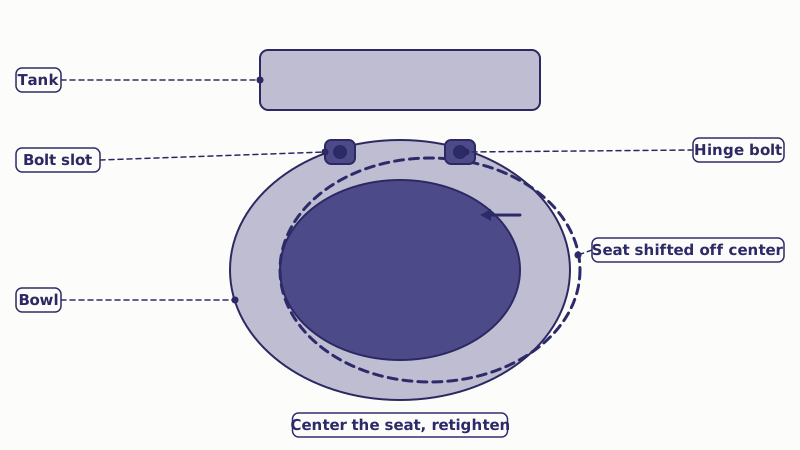
- Center the seat so it lines up with the bowl rim. A seat pushed off to one side will keep wobbling no matter how tight the bolts are.
- Hold the bolt head with a screwdriver. Reach under the rim behind the bowl and turn the nut clockwise.
- Alternate sides, a few turns on each, until both are firm.
- Snap the caps shut.
Do not overtighten. Plastic bolts can crack and, with enough force, the porcelain can chip. Snug is enough. If you cannot reach the nut because of the tank, a slim wrench or pliers does the job.
Why does my toilet seat keep coming loose?
A seat keeps loosening when the bolts are stripped, the nuts are worn, the hardware is cheap plastic, or the seat is the wrong size for the bowl, so the hinge sits on a slope. Fixes are rubber washers, new stainless steel bolts with a lock-style nut, or a seat that fits the bowl.
Try these in order, cheapest first:
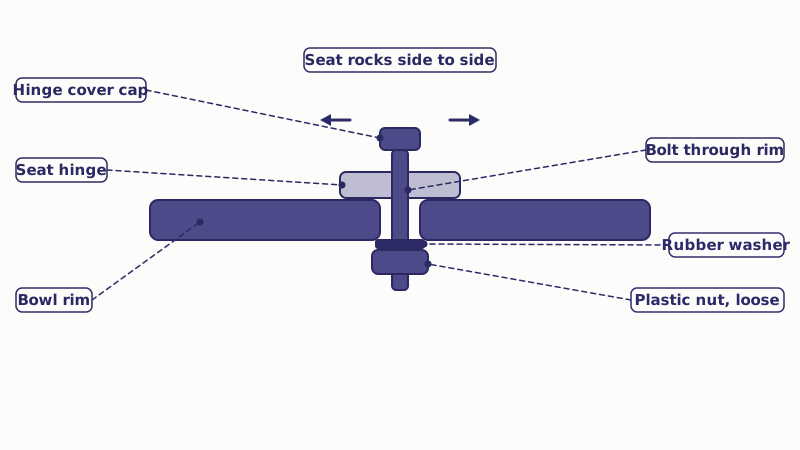
- Add washers. A rubber washer between the nut and the underside of the bowl takes up play and grips better. One on each bolt often cures a chronic wobble.
- Replace the hardware. Stainless steel bolts with brass or nylon nuts last far longer than all-plastic sets. Seat bolt kits are cheap at hardware stores.
- Check the seat. Bowls come in round and elongated shapes, and the seat has to match. Measure from the bolt holes to the front edge of the bowl and compare it with the seat's listed size.
- Use the right kind of seat. Some seats, often called soft-close or quick-release, fasten with hidden bolts from the underside or have a clip. You remove the seat, then reach the fixings.
If a bolt will not back out because the plastic has fused, you can cut the shank with a small hacksaw, taking care not to scratch the bowl. Wear eye protection and tape over the porcelain first.
How do you replace a toilet seat?
Remove the old seat by unscrewing the bolts, or by releasing the quick-release catch. Clean the rim, line up the new seat with the bolt holes, fit the new bolts and nuts, center the seat, and tighten. Buy a seat that matches the bowl shape and bolt spacing, and keep the old one's measurements.
Take a phone photo of the hinge area before you remove the old seat. It shows which side the washers go and how the bolts sit. A new seat typically comes with bolts and nuts, though they are often the plastic kind, so swapping in stainless or brass hardware from a kit is a cheap upgrade.
While the seat is off, clean the area. The space under hinges collects grime, and a quick wipe with a mild cleaner makes it easy to see any crack in the porcelain around the bolt holes. A cracked rim is a reason to replace the toilet, and our cost guide has the ranges.
When should you call a plumber about a loose toilet seat?
Call a plumber when the toilet itself rocks, when water or a smell shows at the base, or when a cracked bowl, rim or bolt hole means the toilet may need replacing. A loose seat alone does not need a plumber, and a handyman typically charges $60 to $150 for small toilet jobs.
A local plumber we arrange for you can reset a rocking toilet with a new seal, check the flange and straighten the bolts, then confirm that nothing leaks. You get a written quote before any work starts. Use the quote page to ask for a visit, and see how a job runs for the steps.
Sometimes a seat that will not stay tight is the first thing you notice about a toilet that has more wrong with it: a hairline crack, a worn flange or a toilet that was never set quite level. If you suspect that, a short visit is cheaper than a leak. For the whole service, see City of Angels Plumbing.
Common questions
How long does it take to fix a loose toilet seat?
About five to ten minutes for most seats. The work is opening the caps, holding the bolts and turning the nuts. Stripped or fused bolts take longer, and replacing the seat entirely is still a quick job once you have the right size.
What should I ask before I hire someone to fix a toilet seat?
Honestly, you rarely need to hire anyone for a loose seat. If a plumber is already coming for a toilet, ask them to check the seat and base bolts at the same visit. For a standalone call, ask what the service call fee is, since it may exceed the cost of the part.
Does someone need to be at the property?
If you hire someone, yes, or an adult you trust, so they can reach the bathroom. If you do it yourself, you only need a screwdriver and perhaps a pair of pliers. Nobody needs to turn the water off for a seat repair.
Can a loose toilet seat damage the toilet?
It can. A wobbling seat puts uneven force on the hinge bolts, and when the plastic hinge or bolts crack, they can chip the porcelain around the holes. A seat that is tightened evenly and checked now and then is unlikely to cause damage.