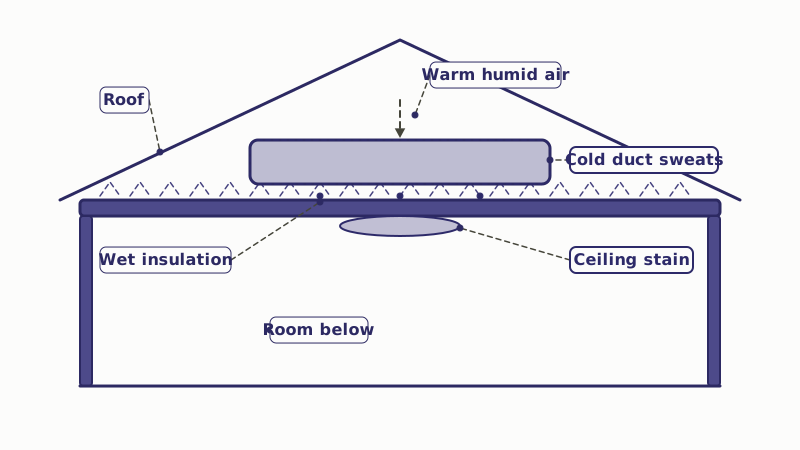
A water spot on the ceiling with no drip usually means water got there at some point. The question is whether it still does. The stain can be an old leak that was fixed, a pipe or roof that leaks only now and then, or condensation from a duct or an exhaust fan. Mark the edge of the stain with a pencil and check it again in a few days. The leaks and burst pipes hub covers the related problems, and the home page shows how we arrange a visit.
What causes water spots on a ceiling when nothing is leaking?
The common causes are an old leak that dried and left a stain, an intermittent leak from a roof or a fixture above, condensation on a cold duct or pipe in the attic, and a bathroom fan that vents into the attic instead of outside. A slow pipe leak can also dry in the heat before it ever drips.
Walk through each one:
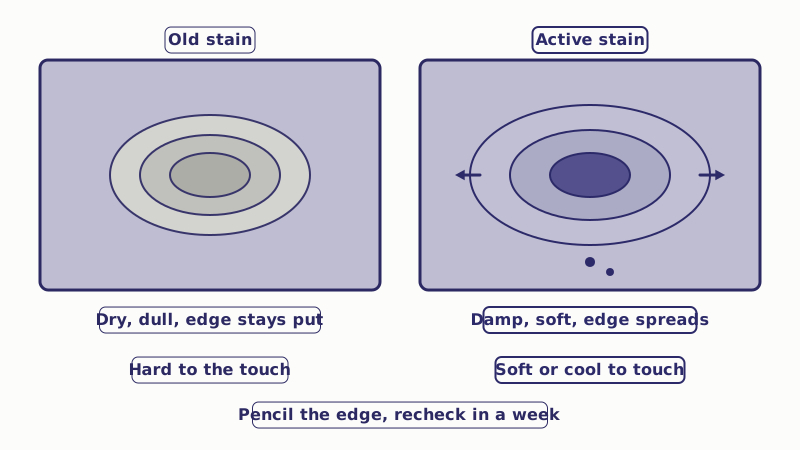
- Old stain. A past leak, fixed or stopped, leaves a brown ring. The stain stays until it is sealed and painted. A dry, unchanging ring with no smell is often this.
- Intermittent roof leak. Rain, or wind-driven rain, lets water in only at certain angles. The stain appears after a storm and the ceiling dries between storms.
- Intermittent plumbing leak. A fixture above that leaks only when used, such as a shower pan, a toilet seal or a drain, leaves a stain that grows after use.
- Condensation. A cold supply pipe or duct sweats in warm, humid air and drips onto insulation. The ceiling gets damp rings and sometimes mildew.
- Exhaust air. A bath fan that blows warm, moist air into the attic can condense on the roof deck and rafters.
- Nail pops and stains along seams. Dark lines on drywall seams can come from moisture at the screws, or from dust that settles on a cold line. Not all of those are water.
If a stain looks wet, feels cool, smells musty or has soft drywall, treat it as active.
How can I tell if the stain is old or still active?
Press a gloved hand against the stain. Active moisture feels cool and damp, and the drywall may feel soft. Trace the edge of the stain with a pencil and date it, then compare after a week and after the next rain or the next use of the fixture above. If the ring is the same, it is probably old. If it grows, the source is active.
A few more checks:
- Meter test. Shut off every tap and appliance that uses water, then look at the leak detection gauge on the LADWP meter. If it moves, a pipe is leaking somewhere. EPA WaterSense says to read the meter, wait two hours with no water use and read it again.
- Moisture meter. A plumber or inspector can measure the moisture in the drywall without opening it. Hardware stores sell basic ones.
- Look from above. If you can reach the attic safely, check for wet insulation, a damp roof deck and the underside of ducts and pipes. Do not step off the joists.
- Use the fixtures. Run the shower, then the sink, then flush the toilet above, and see whether the stain changes.
- Check your bill. A jump in the water bill with no change in use points to a leak.
Take photos with a date so you can compare. It is easy to guess wrong from memory.
Is a ceiling stain with no leak dangerous?
Usually not right away, but it is not harmless. The risk is that the ceiling stays damp and grows mold, or that the stain is the sign of a slow leak that rots wood. The EPA says water-damaged materials should be dried within 24 to 48 hours to avoid mold, and porous ceiling materials that stay wet may need replacing.
If the stain is dry and old, the issue is cosmetic. If it is damp, musty or spreading, find the source before you paint. The EPA advises against painting or caulking over mold, because the paint will peel and the mold will return. A mold patch under about 10 square feet may be cleaned by a homeowner following EPA's guidance, and larger areas call for a contractor.
Look for signs of sagging, bubbling or cracks, and keep people out from under a ceiling that droops. A ceiling can hold a lot of water in the insulation above, and then give way.
Can a stain be there with no leak in the pipes at all?
Yes. Roof leaks, condensation and old damage all leave stains without a plumbing leak. A plumber checks the supply and drain lines and rules them out, and then the roofer, the HVAC technician or the bath fan installer take over. Knowing it is not a pipe is a useful result, because it points you to the right trade.
In Los Angeles, rain is rare but heavy when it comes, so a roof or flashing problem can sit unseen for months and show only after a storm. An attic with ducts, an air handler or a bath fan vented into it can add moisture in warm weather. A plumber can look at pipes and drains. A roofer is the first call for a stain that appears only after rain. An HVAC contractor can check ducts and condensate lines.
Our guide to the ceiling water leak covers the case where water is actually coming through.
Should I paint over a ceiling water stain?
Only when the ceiling is dry and the source is fixed. Painting over a damp or active stain hides the problem and often peels or bleeds through. Once the source is found and the material is dry, use a stain-blocking primer and then paint. If drywall is soft, crumbling or moldy, it should be replaced before it is painted.
A fresh coat is also a trap, because it hides signs of a continuing leak. If you plan to sell, a stain that was painted over still shows up in an inspection with a moisture meter. It is better to know the cause. Ask a plumber for a written note if a pipe was ruled out.
When should I call a plumber?
Call when the stain grows, when the ceiling feels damp, when your meter moves with all water off, or when you cannot find the cause. A plumber can test the supply and drain lines above the stain and tell you whether a pipe is involved. If the pipes are fine, you will know to call a roofer or an HVAC contractor. We'll arrange a visit through the quote page.
Ask for a written quote that covers testing, any access hole and the repair. Our page on leak detection cost lists the ranges, and the burst water pipe page covers the case where the leak is serious.
Common questions
How long does it take to find the cause of a ceiling stain?
A plumber can often check the supply and drain lines above a stain in an hour or two, using the meter, pressure tests and a moisture reading. A hard-to-find or intermittent leak takes longer, and a roof or duct cause can only be ruled in by waiting for the next rain or use. Ask what the visit covers.
What should I ask before I hire someone to check a ceiling stain?
Ask which tests the plumber will run, whether you get a written finding, and whether the fee is credited if a repair follows. Ask what happens if the pipes check out fine. Look up the CSLB record at cslb.ca.gov. Any deposit over $1,000 or 10 percent of the price is above the California cap.
Does someone need to be at the property?
Yes, be there or send a trusted adult. The plumber needs the room below, the rooms above, the attic hatch and the main valve, and may turn the water off for a test. You will want to hear the finding yourself. Renters should tell the landlord the visit is happening.
Will a ceiling stain with no leak go away by itself?
No. A stain stays until it is cleaned or sealed and painted. A stain that is damp or growing is a sign of moisture that will not go away by itself. If the stain is old and dry, a stain-blocking primer and paint will cover it. Fix any source first, or the stain returns.
Is a brown ring on the ceiling always water?
Usually, yes, but not always. Brown rings are the classic sign of water damage, and rings with darker edges suggest repeated wetting. Other marks come from smoke, candle soot, dust along cold lines or tannin leaching from wood. If you are not sure, trace and date the stain and check whether it changes after rain and after water use.